Understanding the Role of Oscillation in Track Welding
The Fundamentals of Track Welding
Introduction to Track Welding
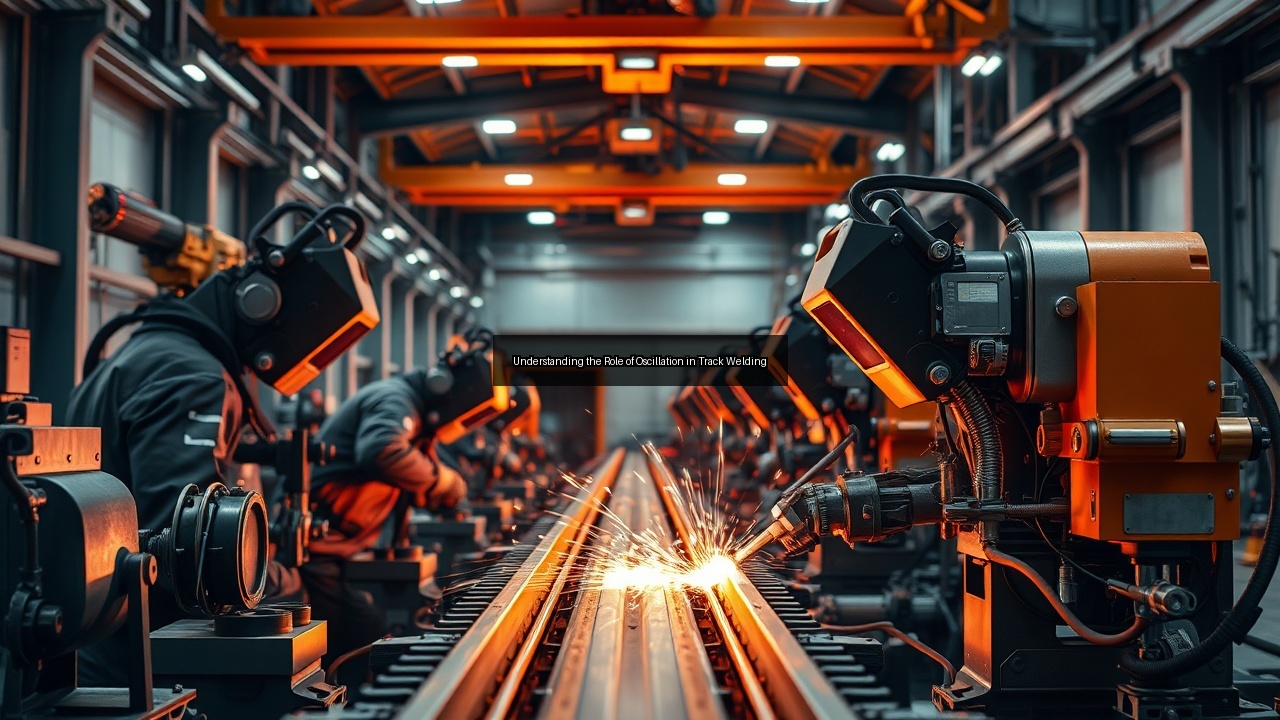
Track welding forms an essential part of rail and construction industries, providing a robust method for joining metal components. This technique primarily focuses on the welding of tracks, ensuring that railways and other structures maintain structural integrity under heavy loads and varying environmental conditions. Track welding involves using specialized machines designed to deliver high-quality welds efficiently. The precision and durability achieved through effective track welding significantly enhance safety and performance in transport systems. Understanding the fundamentals of this process allows professionals to appreciate the complexities involved in welding tracks and the importance of utilizing appropriate technology.
The Role of Welding Machines in Track Welding
Welding machines play a crucial role in the track welding process. They provide the necessary power and control to ensure that welds are made correctly, resulting in strong and long-lasting connections. These machines can vary in type, size, and capability, depending on the specific requirements of the welding task. Modern welding machines come equipped with advanced features such as programmable settings and digital displays, which help operators to fine-tune their processes for optimal results. With the right welding machine, operators can achieve greater consistency in weld quality while minimizing potential defects, enhancing the overall efficiency of track welding operations.
Types of Track Welding Machines
Several types of track welding machines cater to different welding needs in the industry. Among the most common are flash-butt welders, which use heat generated by electrical resistance to join metal pieces. This method produces high-quality welds without requiring additional filler material, making it both cost-effective and efficient. Another type is the thermite welder, which utilizes a chemical reaction to melt the metal and form a joint. Additionally, rail saws and grinding machines often accompany these welders to prepare and finish the weld surfaces. The choice of machine for track welding ultimately depends on the specific requirements of the job, including the materials involved and the desired weld characteristics.
The Mechanics of Oscillation in Welding
Understanding Oscillation and Its Importance
Oscillation refers to the repetitive movement of welding equipment, specifically the welding electrode, during the welding process. This movement enhances the heat distribution and penetration of the weld, leading to stronger joints. The oscillation creates a wider weld bead, which improves the fusion of the base materials. Understanding oscillation's significance in welding is vital for professionals aiming to achieve high-quality results. Proper oscillation reduces the risk of defects, such as cracks or incomplete fusion, ensuring the longevity and safety of welded structures. By mastering oscillation techniques, welders can significantly enhance their welding performance and efficiency.
How Oscillators Enhance the Welding Process
Oscillators are specialized devices that facilitate controlled oscillation during welding. By introducing a side-to-side movement, oscillators improve the melting and mixing of the weld pool, resulting in a more uniform and effective weld. This enhanced mixing process leads to better mechanical properties in the final weld, such as increased strength and ductility. Moreover, oscillators help to reduce the heat-affected zone, minimizing thermal distortion and preserving the integrity of the surrounding materials. The use of oscillators in welding processes is gaining traction as industries prioritize quality and efficiency in their operations, making it an essential consideration for modern welding practices.
The Connection Between Oscillators and Welding Electrode Performance
The performance of welding electrodes is closely linked to the application of oscillation in welding. As the oscillator moves the electrode, it ensures that the heat is evenly distributed across the weld pool. This uniform heating prevents localized overheating and promotes better fusion between the electrode and the base materials. Additionally, oscillation allows for the use of a wider variety of electrodes, including those with specialized coatings designed for specific materials or applications. The ability to optimize electrode performance through controlled oscillation not only enhances weld quality but also extends the lifespan of the electrodes, ultimately reducing operational costs for welding operations.
Optimizing Welding with Oscillation Technology
Selecting the Right Equipment for Effective Oscillation
Choosing the right equipment for oscillation in track welding is critical for achieving optimal results. Various factors must be considered, including the specific welding application, the materials being used, and the desired weld quality. Investing in a high-quality oscillating track welder can significantly enhance the efficiency and precision of the welding process. Features to look for include adjustable oscillation frequencies, programmable controls, and compatibility with different welding electrodes. Selecting the right machine for track welding not only streamlines operations but also ensures that the final welds meet industry standards for strength and durability. Careful consideration of these factors can lead to improved productivity and reduced downtime.
The Impact of Oscillation on Return on Investment
Implementing oscillation technology in track welding can lead to substantial improvements in return on investment (ROI). Increased welding efficiency translates to reduced labor costs and shorter project timelines. Moreover, the enhanced quality of welds minimizes the need for rework or repairs, further driving down expenses. Companies that adopt advanced oscillation techniques can enjoy a competitive edge in the market, as their ability to deliver high-quality, durable welds attracts more clients. Evaluating the long-term financial benefits of oscillation technology becomes essential for businesses seeking to maximize their profitability in the welding sector.
Ceramic and Wire in Oscillating Track Welders
Ceramic and wire components play vital roles in the functionality of oscillating track welders. The use of ceramic insulators helps to protect sensitive components from heat and wear, ensuring longevity and reliability in demanding environments. Additionally, the choice of wire for welding can significantly affect the quality of the weld. High-quality welding wire, specifically designed to work with oscillating machines, can enhance the efficiency of the welding process and contribute to superior weld characteristics. Understanding the interplay between these materials and oscillation technology allows welders to optimize their equipment for better performance and more reliable outcomes.
Innovations and Future Trends in Track Welding
Advancements in Track Welding Machines
The track welding industry continually evolves, with advancements in technology leading to more efficient and effective machines. Innovations such as automated welding systems and smart controls are transforming traditional practices. These modern machines incorporate sensors and AI-driven algorithms to optimize welding parameters in real-time, ensuring consistent quality across various applications. As manufacturers invest in research and development, we can expect to see even more sophisticated solutions that improve safety, efficiency, and weld quality. The future of track welding machines promises enhanced capabilities that will shape how the industry approaches welding tasks.
Gullco International's Contributions to Track Welding Technology
Gullco International stands out as a leader in the field of track welding technology. The company has pioneered numerous products designed to enhance the efficiency and effectiveness of welding operations. By focusing on innovation, Gullco continues to develop machines that incorporate state-of-the-art oscillation technology, allowing for precise and durable welds. Their commitment to quality ensures that welders have access to reliable equipment that meets the demands of modern welding applications. As the industry evolves, Gullco International remains at the forefront, setting standards that others strive to achieve in track welding technology.
The Future of Oscillation in Welding Techniques
The future of oscillation in welding techniques looks promising, with ongoing research and development paving the way for new applications and improvements. As industries increasingly prioritize automation and efficiency, oscillation technology will likely play a central role in the evolution of welding processes. The integration of smart technology and data analytics will enable welders to optimize their techniques further and achieve even higher standards of quality. Embracing these advancements not only enhances the capabilities of track welders but also contributes to safer and more reliable welding practices across various sectors. The momentum behind oscillation technology indicates a bright future for welding innovations.